We use cookies to make your experience better. To comply with the new e-Privacy directive, we need to ask for your consent to set the cookies. Learn more.

April 17, 2026
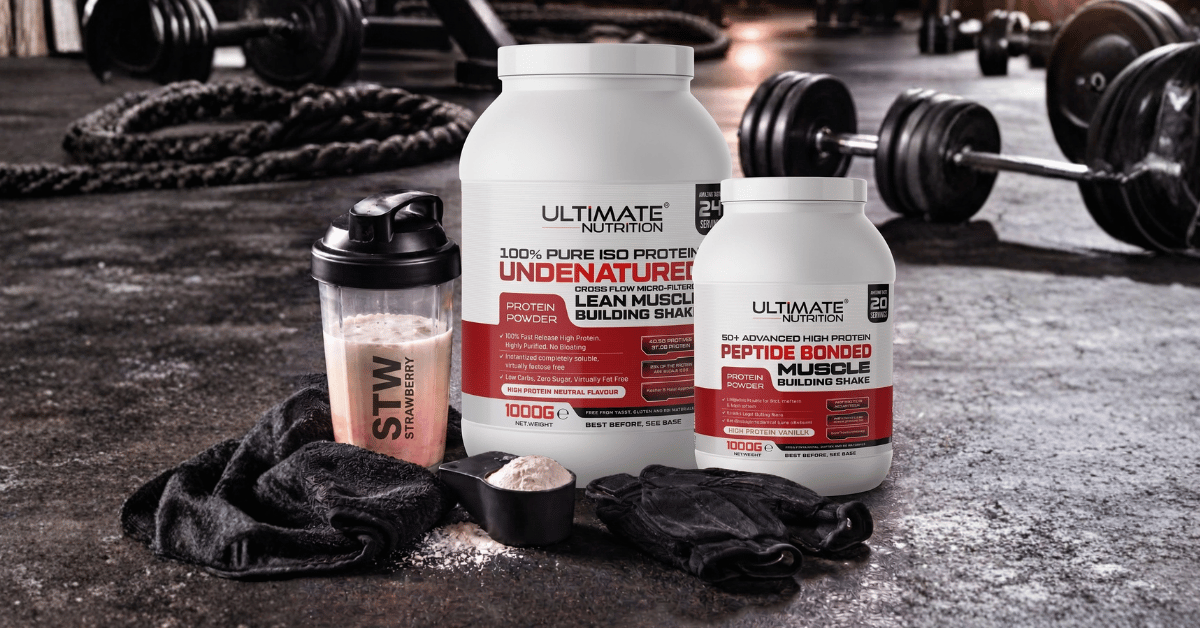
The Complete Guide to Protein Powder — Whey, Isolate & Beyond
Why Protein Powder Matters
Protein is the most important macronutrient for anyone who trains. It is the raw material from which muscle is built, repaired, and maintained. Without adequate daily protein, training produces a fraction of its potential results — regardless of how hard you work in the gym.
For most people, getting enough protein from food alone is manageable but inconvenient. Protein powder exists to close the gap: a concentrated, high-quality protein source that can be prepared in seconds, taken anywhere, and precisely calibrated to your macronutrient targets.
That is the simple case. The more nuanced one — which type, how much, when, and why quality matters so much — is what this guide covers.
Ultimate Nutrition UK has been formulating protein supplements since 1978. Arthur Fairhurst spent decades studying sports nutrition, training doctors, and competing at the highest levels. What follows draws on that depth of expertise.
-
 ULTIMATE MUSCLE MASS PROTEIN 4000As low as £25.56 Regular Price £31.95
 -


What Is Protein Powder?
Protein powder is a concentrated form of protein extracted from a food source and processed into a stable, soluble powder. The most widely used source is milk — specifically the whey fraction, a by-product of cheese production. Other sources include casein (the other milk protein), egg white, and plant-based alternatives such as soy or pea.
The processing involves filtering away most of the non-protein components — fat, carbohydrates, lactose — to produce a powder that is predominantly protein by weight. The degree of processing determines whether the result is a concentrate (less filtered, 70–80% protein) or an isolate (more filtered, 90%+ protein).
For a full breakdown of exactly what goes into protein powder and how it is made, see our guide: What Is Protein Powder Actually Made Of?
The Main Types of Protein Powder
Whey Protein Concentrate
The most widely used form of protein powder. Whey concentrate retains a small amount of fat and lactose after processing, which gives it a slightly richer flavour and a protein content of typically 70–80% by weight. It is a complete protein source — containing all nine essential amino acids — with a particularly high concentration of leucine, the amino acid most directly responsible for triggering muscle protein synthesis.
Whey concentrate is the right choice for most active people: excellent protein quality, complete amino acid profile, good flavour, and accessible pricing. For anyone without lactose sensitivity who is not in a strict calorie deficit, it is hard to improve on.
Whey Protein Isolate
Whey isolate undergoes additional filtration — cross-flow microfiltration or ion exchange — to remove virtually all remaining fat and lactose. The result: 90%+ protein by weight, faster absorption, and a macronutrient profile suited to precise calorie management.
Isolate is the preferred choice for those who are lactose-sensitive, following a strict calorie-controlled plan, competing and tracking macros closely, or simply wanting the purest, most concentrated protein source available. It costs slightly more than concentrate, but you are paying for a higher-grade product.
For a detailed comparison, see: Whey Protein vs Whey Isolate — Which Should You Choose?
Casein Protein
Casein is the other major milk protein — slower to digest than whey, forming a gel-like substance in the stomach that releases amino acids gradually over several hours. This makes it particularly suited to overnight use, when a sustained supply of amino acids during the fasting period of sleep supports recovery and prevents muscle protein breakdown.
For those focused on maximising recovery, a casein supplement before bed complements a whey-based daytime protein strategy effectively.
Diet and Weight Management Proteins
Diet whey and low-calorie protein powders are formulated specifically for those in a calorie deficit. Higher protein percentage, lower fat and carbohydrate, sometimes with added ingredients to support satiety. For those using protein powder primarily as a weight management tool, these formulations offer the best macronutrient profile for the purpose.
See: The Best Protein Powder for Weight Loss — What Actually Works
Mass Gainers
Not a protein powder in the traditional sense — mass gainers are high-calorie formulas designed to provide a significant calorie surplus alongside protein. They are formulated for those who struggle to gain weight despite training: hardgainers, bodybuilders in a deliberate bulking phase, or those with high caloric requirements.
For a clear explanation of when a mass gainer is and isn't appropriate, see: Mass Gainers vs Protein Shakes — What's the Difference?
Unflavoured Protein Powder
Unflavoured protein powder contains no sweeteners, flavourings, or additives beyond the protein itself. It is the purest form available and is used by those who add protein to cooking, blend it with whole foods, or prefer complete control over what goes into their shake. More versatile than flavoured options, though less palatable alone for many people.
See: Unflavoured Protein Powder — Who It's For and How to Use It
Who Should Take Protein Powder?
Protein powder is not exclusively for bodybuilders and elite athletes. Anyone whose daily protein requirements are difficult to meet through food alone can benefit from supplementation. In practice, this covers a wide range of people:
Strength and Resistance Training Athletes
The group with the most established need. Resistance training increases muscle protein synthesis and, consequently, protein requirements. Consistently hitting 1.6–2.2g of protein per kilogram of bodyweight per day through food alone is achievable but often inconvenient. Protein powder makes it practical.
Endurance Athletes
Often overlooked in the protein conversation, endurance athletes have meaningful protein requirements — for muscle repair following long sessions, prevention of muscle catabolism during prolonged effort, and immune function support.
Active Lifestyle — General Fitness
Regular gym-goers, those training for health rather than competition, and anyone pursuing fat loss while maintaining lean mass all benefit from ensuring adequate protein intake. Protein powder is simply the most convenient way to achieve this without dramatically increasing the volume of food.
Adults Over 50
Muscle mass naturally declines with age — a process known as sarcopenia. Older adults typically have higher protein requirements per kilogram of lean body mass to maintain muscle compared to younger individuals, and a blunted muscle protein synthesis response to lower protein doses. Ensuring adequate, high-quality protein intake is one of the most evidence-supported nutritional interventions for healthy ageing.
Those on Reduced-Calorie Diets
When calories are restricted, protein intake often falls with them. Maintaining high protein during a deficit is critical for preserving lean muscle mass, which in turn protects metabolic rate over time. Protein powder allows high protein intake without excessive calories.
How Much Protein Do You Actually Need?
How Much Protein Do You Need to Build Muscle? The evidence-based consensus for active individuals seeking muscle development or maintenance:
- Minimum for muscle maintenance: 1.2g per kilogram of bodyweight per day.
- Optimal for muscle building: 1.6–2.2g per kilogram of bodyweight per day.
- Older adults (50+): up to 2.0g per kilogram may be beneficial.
- Those in a calorie deficit: towards the higher end of this range helps preserve lean mass.
For a 75kg active individual targeting muscle development, this equates to 120–165g of protein per day. A typical whole-food diet might provide 60–90g. A protein shake or two bridges the remainder conveniently and precisely.
How Much Protein Can You Absorb in One Meal?
The "30g ceiling" claim — that the body can only absorb 30g of protein per meal — is one of the most persistent myths in nutrition. The science does not support it.
The body absorbs all ingested protein essentially. What varies is the rate of digestion and how efficiently a given dose stimulates muscle protein synthesis at any one time. Larger doses are digested more slowly; the protein is still absorbed, just over a longer window. The more practically important variable is total daily intake.
For the full breakdown: How Much Protein Can Your Body Absorb in One Meal
When Should You Take Protein Powder?
Post-Workout
The post-exercise window is characterised by elevated muscle protein synthesis sensitivity. Consuming protein within one to two hours of training is well-supported, though the window is longer than early research suggested — up to 24–48 hours of elevated sensitivity post-session.
Morning
After an overnight fast, providing protein in the morning supports muscle protein synthesis and sets a strong nutritional foundation for the day.
Between Meals
A protein shake between meals helps maintain consistent amino acid availability throughout the day — important for sustained muscle protein synthesis rather than large spikes followed by prolonged deficits.
Before Bed (Casein)
Casein protein before sleep provides a slow-release protein supply during the overnight fasting period, supporting overnight recovery and muscle maintenance.
For a detailed evidence review: Should You Take Protein Before or After a Workout?
Why High-Quality Protein Matters
The protein powder market is one of the most competitive in supplements — and one of the most prone to quality shortcuts. Common issues in lower-grade products include:
- Amino acid spiking — adding cheap individual amino acids (glycine, taurine, creatine) to artificially inflate the nitrogen reading used in protein content tests, without adding meaningful muscle-building value.
- Undisclosed fillers — added to bulk out product weight without contributing protein content.
- Inconsistent dosing — actual protein content differs from the label.
- Inferior raw materials — lower-grade whey with higher impurity levels.
Manufacturing quality controls applied to rigorous purity testing, consistent dosage, complete ingredient transparency, and freedom from undisclosed additives. When the label says 25g of whey protein, that is exactly what you receive.
Ultimate Nutrition UK has held this standard since Arthur Fairhurst established the brand in 1978. It is not a marketing position — it is a manufacturing commitment, reflected in the fact that our products are recommended by doctors, chiropractors, physiotherapists, and Harley Street clinics throughout the UK.
Natural Protein Powder — Why Ingredients Matter
A completely natural formulation is a founding principle of Ultimate Nutrition UK. No artificial colours. No artificial sweeteners. No compounds we cannot account for or that our customers should question.
In a market where artificial additives are routine, natural protein powder is a meaningful differentiator — particularly for those who are health-conscious beyond pure performance, who follow a clean-eating approach, or who have sensitivities to synthetic compounds.
How to Choose the Right Protein Powder
With the range of options available, the right choice comes down to your specific situation:
|
YOUR SITUATION |
RECOMMENDED TYPE |
|---|---|
|
Building muscle, no dietary restrictions |
Whey Concentrate — optimal value, complete amino profile |
|
Lactose-sensitive or clean macro tracking |
Whey Isolate — purer, faster absorbing, near-zero lactose |
|
Weight loss / calorie deficit |
Whey Isolate or Diet Whey — maximum protein per calorie |
|
Struggle to eat enough to gain mass |
Mass Gainer (MASS 4000) — calorie-dense, high protein |
|
Post-workout AND overnight recovery |
Whey post-workout + Casein before bed |
|
Adding to cooking, maximum versatility |
Unflavoured Whey Concentrate or Isolate |
|
General health, older adult |
Whey Concentrate — high leucine, supports muscle maintenance |
Common Questions
How many protein shakes a day is too many?
Protein shakes for weight gain work best when they’re treated as a supplement rather than a food group. One to two shakes per day is a sensible range for most people, supporting a diet built on whole‑food protein sources. The key issue isn’t “too much protein,” but when shakes start replacing dietary variety, fibre, and micronutrients. For most healthy adults who train regularly, having two shakes per day is entirely appropriate and can effectively support weight‑gain goals.
See: How Many Protein Shakes a Day Is Too Many?
Can you take protein powder and creatine together?
Yes — and many serious athletes do. They work through entirely different mechanisms and complement each other well: protein provides the building material for muscle repair and growth; creatine improves the quality of training that stimulates that growth. There is no negative interaction between them.
See: Creatine vs Protein — Do You Need Both?
Is protein powder suitable for vegetarians?
Whey is a dairy-derived product, making it suitable for lacto-vegetarians. It is not suitable for those following a vegan diet.
What does vanilla protein powder actually taste like?
Flavour profiles vary considerably between brands and formulations. Our vanilla protein is formulated with natural vanilla flavouring — a clean, genuinely vanilla taste rather than an artificially sweet confection. See our Vanilla Protein Powder page for full details.
The Ultimate Nutrition UK Protein Range
Every protein supplement in the Ultimate Nutrition UK range is:
- Formulated and manufactured to the same quality standard as licensed medicines.
- Made in England — in state-of-the-art UK facilities, under rigorous quality controls.
- Completely natural — no artificial colours, no inferior substitutes, no undisclosed additives.
- Recommended by healthcare professionals — including doctors, physiotherapists, and Harley Street clinics.
- Backed by 45+ years of expertise — Arthur Fairhurst built this brand on the foundation of genuine nutritional knowledge, not marketing.
Customers who began using Ultimate Nutrition UK's protein products in the 1970s still use them today. That is not a claim that can be manufactured. It is the result of consistent quality over decades.



Recent Posts