We use cookies to make your experience better. To comply with the new e-Privacy directive, we need to ask for your consent to set the cookies. Learn more.

August 28, 2026
6 Natural Herbs That Support Healthy Testosterone Levels
Nature got there before the laboratory. The herbs that appear in the best natural testosterone supplements today were in use for hormonal health, virility and physical performance thousands of years before sports nutrition became an industry. They were used in ancient India, China, the Ottoman Empire, medieval Europe, and ultimately, by researchers in Bulgaria who asked a question that brought them to wider attention: what exactly are these plants doing, and can we measure it?
The answer, for the best of them, is a credible yes. Not the breathless 'scientifically proven' claims common in supplement marketing, but a genuine, documented basis for the traditional uses that generations of practitioners observed.
This guide covers six herbs with both significant historical use and meaningful modern research behind their role in supporting healthy testosterone levels. For each one, we'll cover the origin, the active compounds, the mechanism, and what the evidence actually shows.
1. Tribulus Terrestris, The Most Studied Natural Testosterone-Supporting Herb
Origin and history: Native to Mediterranean Europe, India, China and much of Africa, Tribulus has been used for over 5,000 years in Ayurvedic and traditional Chinese medicine, primarily for vitality, kidney health, and reproductive function.
Active compounds: Steroidal saponins, particularly protodioscin. Alkaloids, flavonoids and phytosterols also present.
Mechanism: Tribulus stimulates production of luteinizing hormone (LH), the pituitary signal that instructs the testes to produce testosterone. It does not provide testosterone, it supports the body's own production system.
What the research shows: Most consistent evidence for testosterone support in older men with declining LH signalling. Multiple clinical studies, particularly from Bulgaria where athletes used it in the 1970s. Extract purity is the critical variable, 98% standardised saponin extract is the research benchmark.
What to look for: 98% saponin standardisation, 400–750mg dose per serving, no fillers, UK-manufactured.
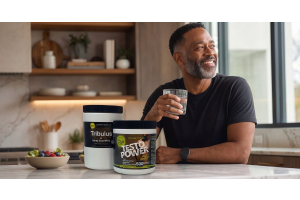
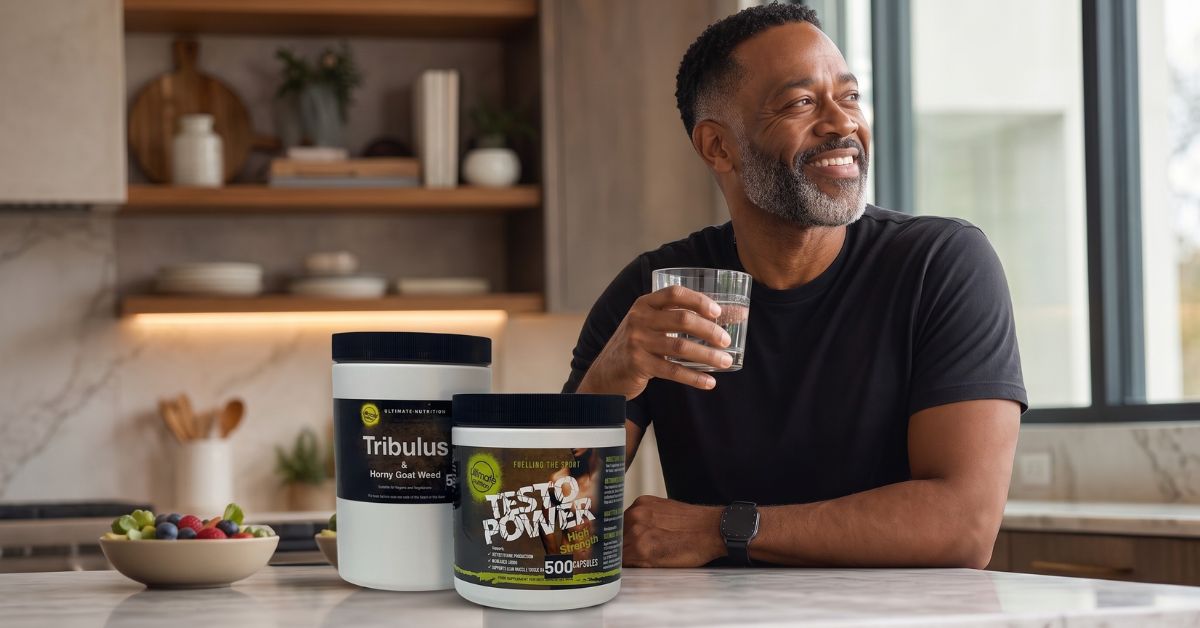
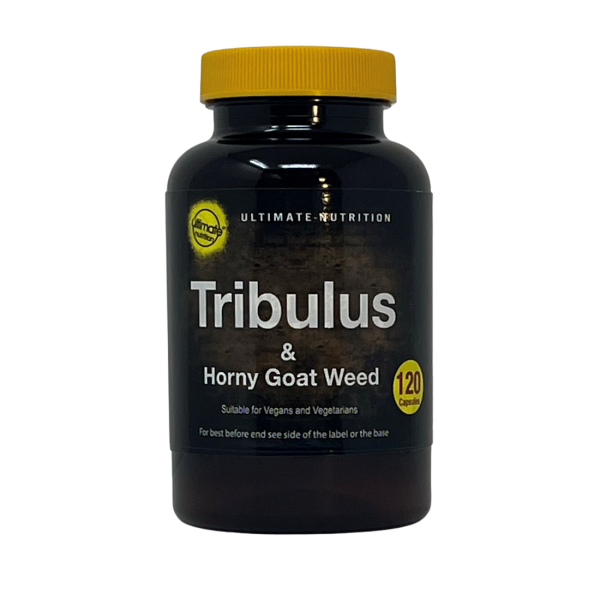
Ultimate Nutrition's 98% Tribulus Terrestris + Horny Goat Weed provides 510mg of 98% pure Tribulus extract per capsule. Made in England since 1978.
2. Epimedium (Horny Goat Weed), Ancient Tonic, Modern Research
Origin and history: The name 'Horny Goat Weed' originates from the observation of a Chinese goat herder in the 3rd century AD who noticed unusual sexual behaviour in goats grazing on the plant. Whether or not the story is apocryphal, Epimedium has been used in Chinese traditional medicine for well over a thousand years for kidney and liver health, joint function, and sexual vigour.
Active compound: Icariin, a flavonoid glycoside that is the primary bioactive constituent of Horny Goat Weed.
Mechanism: Icariin has been shown in laboratory research to inhibit PDE5 (the enzyme also targeted by prescription ED medications, though with considerably less potency), to support testosterone signalling pathways, and to have mild androgen-mimicking effects in cell studies. Its combination with Tribulus creates a complementary mechanism: Tribulus on the hormonal production side, Epimedium on the downstream response.
What the research shows: Strongest in traditional and laboratory contexts; human clinical trials are limited but positive. Traditional practitioners and users of Horny Goat Weed tablets and capsules consistently report improvements in energy, libido and physical resilience. When combined with Tribulus, user-reported outcomes are more consistent than either herb alone.
Dosing guidance: 250–500mg Horny Goat Weed extract per serving, in combination with Tribulus.
3. Korean Ginseng (Panax Ginseng), The Most Clinically Studied Adaptogen
Origin and history: Ginseng has been central to both Korean and Chinese traditional medicine for at least 2,000 years. The name Panax derives from the Greek for 'all-healing', a reflection of the breadth of uses documented in traditional texts. Korean Ginseng was used by emperors, athletes and soldiers alike.
Active compounds: Ginsenosides, a family of steroidal glycosides that are the primary active constituents. Different ginsenoside profiles produce different effects; standardised extracts ensure consistent potency.
Mechanism: Korean Ginseng acts as an adaptogen, it helps regulate the body's stress response, supports adrenal function, and modulates the HPA (hypothalamic-pituitary-adrenal) axis. Since cortisol and testosterone are in direct competition for physiological resources, reducing cortisol's suppressive effect on testosterone is one of Ginseng's mechanisms of action. It also has direct effects on nitric oxide production and vascular health.
What the research shows: Among the most robust evidence of any herb in this list. Multiple randomised controlled trials demonstrate improvements in erectile function, libido, testosterone-related markers, and physical energy in men taking standardised Korean Ginseng. It is one of the few herbal ingredients for which systematic reviews of clinical evidence exist and are generally positive.
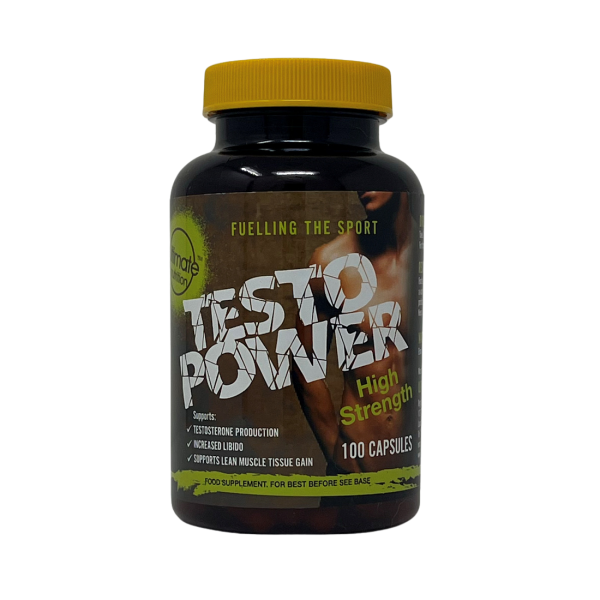
Korean Ginseng is a key ingredient in Ultimate Nutrition's Testo-Power formulation, developed since 1978 alongside Saw Palmetto and Zinc Picolinate for natural hormonal support.
4. Saw Palmetto, The Testosterone Protector
Origin and history: The Saw Palmetto palm is native to the southeastern United States, where Native American tribes have used the berries for centuries for urinary health, sexual function and general vitality. It became widely known in Western herbal medicine from the 19th century onward.
Active compounds: Fatty acids and phytosterols, including beta-sitosterol. These are concentrated in the berry extract.
Mechanism: Saw Palmetto's primary mechanism in testosterone support is different from the other herbs on this list. Rather than stimulating production, it inhibits the enzyme 5-alpha reductase, the enzyme responsible for converting testosterone into dihydrotestosterone (DHT). By reducing this conversion, Saw Palmetto helps maintain available testosterone levels, which is particularly relevant for older men where the conversion rate increases with age.
What the research shows: Well-evidenced for prostate health (reducing DHT's stimulatory effect on prostate tissue). Increasingly studied for its role in maintaining testosterone availability. Most useful as part of a broader testosterone support stack rather than as a standalone intervention.
5. Ashwagandha (Withania Somnifera), Stress, Cortisol and Testosterone
Origin and history: Ashwagandha is one of the most important herbs in Ayurvedic medicine, used for over 3,000 years as a Rasayana, a rejuvenating tonic. The name translates roughly as 'smell of horse', referring both to the plant's scent and to the traditional belief that it imparted the strength and virility of a horse.
Active compounds: Withanolides, a group of steroidal lactones unique to Withania somnifera. These are the primary active constituents in standardised extracts.
Mechanism: Ashwagandha is the most studied adaptogen for cortisol reduction. Multiple clinical trials have demonstrated significant reductions in serum cortisol in men taking standardised Ashwagandha extract. Since cortisol suppresses testosterone production, the secondary effect is an improvement in testosterone levels, and this has been directly measured in clinical studies. Men under chronic stress, whether from work, overtraining, or lifestyle, show the most pronounced response.
What the research shows: Among the best clinical evidence for any herb in the testosterone-supporting category and anti-stress supplements. Randomised controlled trials have shown meaningful reductions in cortisol and statistically significant improvements in testosterone, muscle recovery, and sexual health markers.
6. Fenugreek, The Overlooked Testosterone Herb
Origin and history: Fenugreek has been cultivated since at least 4,000 BC in the Near East, where it was used medicinally and as a culinary spice. Ancient Egyptian papyri reference it for hormonal and reproductive health. It remains a dietary staple across South Asia and the Middle East.
Active compounds: Steroidal saponins (furostanolic saponins) and the compound 4-hydroxyisoleucine. Also a notable source of zinc.
Mechanism: Fenugreek appears to support testosterone primarily by inhibiting aromatase (the enzyme that converts testosterone to oestrogen) and by inhibiting 5-alpha reductase (like Saw Palmetto, reducing DHT conversion). The net effect is to maintain available testosterone. Its zinc content provides additional hormonal support.
What the research shows: Several well-designed clinical trials have found meaningful improvements in testosterone levels, libido and sexual function in men taking standardised fenugreek extract. One notable study found participants reported significant improvements in sexual function and morning testosterone levels versus placebo. Evidence quality is moderate but consistent.
The Case for Combination: Why These Herbs Work Better Together
Each of the six herbs on this list operates through a distinct mechanism:
- Tribulus Terrestris: stimulates LH → testosterone production
- Horny Goat Weed: supports downstream testosterone signalling and tissue response
- Korean Ginseng: reduces cortisol suppression, supports vascular and hormonal health
- Saw Palmetto: reduces testosterone-to-DHT conversion, maintains available testosterone
- Ashwagandha: reduces cortisol, directly improving testosterone production environment
- Fenugreek: inhibits aromatase and DHT conversion, maintains testosterone levels
A well-formulated natural testosterone supplement does not need to contain all six, but it should operate on more than one mechanism. Single-ingredient testosterone boosters can show effect in specific populations, but combination formulations that address both production (Tribulus, Ginseng) and maintenance (Saw Palmetto, Fenugreek) provide a more comprehensive support profile.
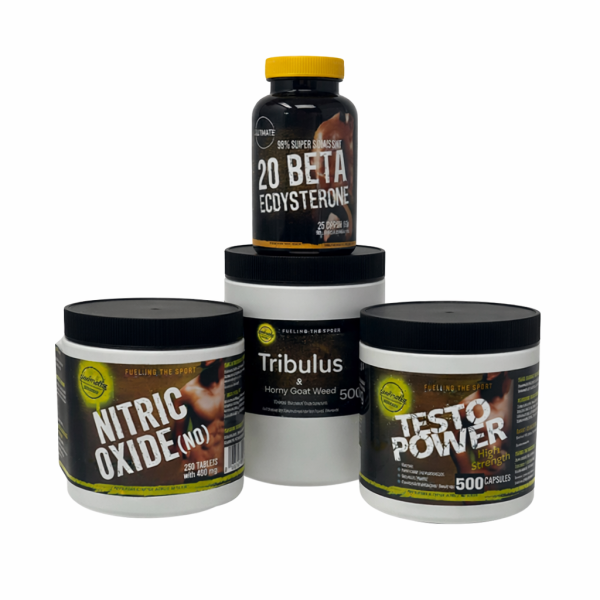
Ultimate Nutrition's testosterone support range addresses multiple mechanisms: Testo-Power (Ginseng, Saw Palmetto, Zinc) supports production and maintenance; 98% Tribulus Terrestris + Horny Goat Weed targets LH stimulation and downstream signalling. For a comprehensive natural testosterone support protocol, made in England, no fillers, no inferior substitutes.
Choosing the Right Natural Testosterone Supplement in the UK
When evaluating natural testosterone supplements UK-wide, these are the specifications that distinguish genuinely effective products:
- Extract standardisation clearly stated (not just the herb name)
- Dose per serving disclosed individually, no proprietary blends
- UK manufacturing, domestic regulatory standards apply
- No unnecessary fillers or inactive bulking agents
- Credible brand history and transparent company information
The best natural testosterone booster is not necessarily the one with the longest ingredient list or the most impressive packaging. It is the one that contains the right ingredients at the right concentrations, manufactured with integrity.
That principle has guided Ultimate Nutrition since 1978. It guides everything we make today.
Ultimate Nutrition has been formulating natural sports and health supplements since 1978 from Lancashire, England. Our testosterone support range is made to the highest grade standards available, no inferior substitutes, no fillers, no compromise. Trusted by athletes and health professionals across the UK for over 45 years.

Recent Posts