We use cookies to make your experience better. To comply with the new e-Privacy directive, we need to ask for your consent to set the cookies. Learn more.

August 25, 2026
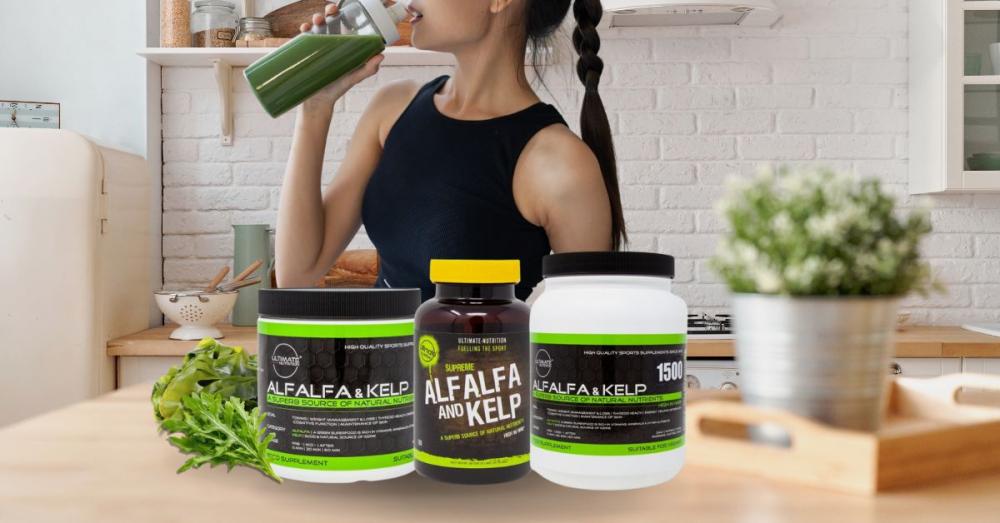
Viv's Healthy Living Series - Using plants from the land and plants from the sea - A great combination.
After nearly 50 years working with nutrition and supplements, one thing I have learnt is that good health is rarely about one single nutrient. Our bodies need a whole range of nutrients every day to keep everything working as it should.
We often talk about vitamins – but what about minerals?
Minerals are an important part of that picture.
We cannot manufacture minerals ourselves. They have to come from what we eat and drink, and although the amounts we need vary enormously, they are involved in some of the most fundamental processes in the human body.
That is why I have always believed in looking at nutrition as a daily habit, rather than something we think about only when we feel run down.
What do minerals actually do?
Think of minerals as some of the body's essential workers.
Calcium is best known for helping to maintain our bones and teeth, but it is also needed for normal muscle and nerve function. Potassium is involved in muscle contraction and nerve transmission. Zinc has roles in normal immune function and the creation of proteins and DNA.
And then there is iodine – a trace mineral that we need in only small quantities but which is required to make thyroid hormones. These hormones are involved in regulating our metabolism and many other processes throughout the body.
The interesting thing is that our requirement for a mineral may be small, but that doesn't make its job unimportant.
Are modern diets always giving us what we need?
I am a great believer that food should come first.
A varied diet containing vegetables, fruit, wholegrains, protein foods, dairy or suitable alternatives, nuts, seeds and fish can provide an excellent range of nutrients.
But we don't all eat perfectly every day, do we?
Busy lives, smaller appetites as we get older, restricted diets, convenience foods and simply eating the same favourite foods again and again can reduce the variety in our diets.
This is one reason I think it is worth occasionally asking yourself a very simple question:
Am I giving my body a good variety of nutrients every day?
Not just protein. Not just vitamins. Minerals too.
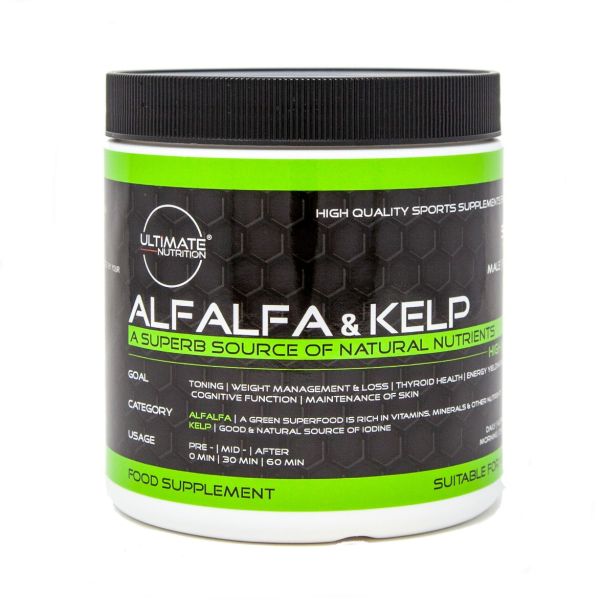
Why Alfalfa?
Alfalfa is a green plant with a remarkably long history of use. Its roots can extend deep into the soil, and the plant naturally contains a range of nutrients.
This is one of the things I have always liked about Alfalfa. Rather than thinking about nutrition purely as isolated ingredients, I like the idea of including nutrient-rich foods and plants as part of a varied diet.
Alfalfa isn't a replacement for fresh vegetables, fruit or a balanced diet – and I would never suggest that it is. I see it as part of the bigger nutritional picture.
And what about Kelp?
Kelp is a sea vegetable and is naturally associated with minerals from the marine environment. It is particularly known as a source of iodine.
Iodine is needed for the normal production of thyroid hormones and therefore contributes to normal thyroid function. Thyroid hormones, in turn, play an important role in normal metabolism.
But with iodine, more is certainly not better.
Kelp can contain quite high and variable amounts of iodine, so it is important to know how much iodine a product provides and to take it only as directed. Anyone with an existing thyroid condition, or who is taking thyroid medication, should speak to their doctor or healthcare professional before using an iodine-containing supplement.
That is an important point, because sensible supplementation should always be about providing the right amount – not simply taking as much as possible.
Why I still like Alfalfa & Kelp
Alfalfa & Kelp is not a new idea for us at Ultimate Nutrition. It is one of those traditional products that has remained part of our range while fashions in nutrition have come and gone.
And perhaps that is because the principle behind it is so simple.
Good nutrition starts with what we provide our bodies every single day.
I don't believe we need to make nutrition complicated. Eat as varied and wholesome a diet as you reasonably can. Include good-quality protein. Eat plenty of different vegetables and other plant foods. Stay active. Drink enough water. And pay attention to the vitamins and minerals your body needs as well.
Supplements should do exactly what their name suggests – supplement a good diet, not replace it.
For me, Alfalfa & Kelp fits beautifully into that philosophy.
The bottom line, a little thought from me…
We tend to notice our nutrition when something goes wrong or when we don't feel quite ourselves. I prefer to think about it the other way round, when eating a varied diet, using supplements, taking exercise we tend to feel good about ourselves, then keep doing what you are doing, and taking what you are taking.
What can I give my body today to help it do all the thousands of jobs I expect it to do for me?
As we get older, staying active and independent becomes increasingly precious. Looking after ourselves doesn't have to mean making dramatic changes. Very often, it is the small things we do consistently – eating well, staying active and giving our bodies the nutrients they need – that make up a healthy way of life.
Look after your body every day. It's the only one you have.
Until next month,
Vivienne Fairhurst
Ultimate Nutrition

Recent Posts