We use cookies to make your experience better. To comply with the new e-Privacy directive, we need to ask for your consent to set the cookies. Learn more.

June 18, 2026
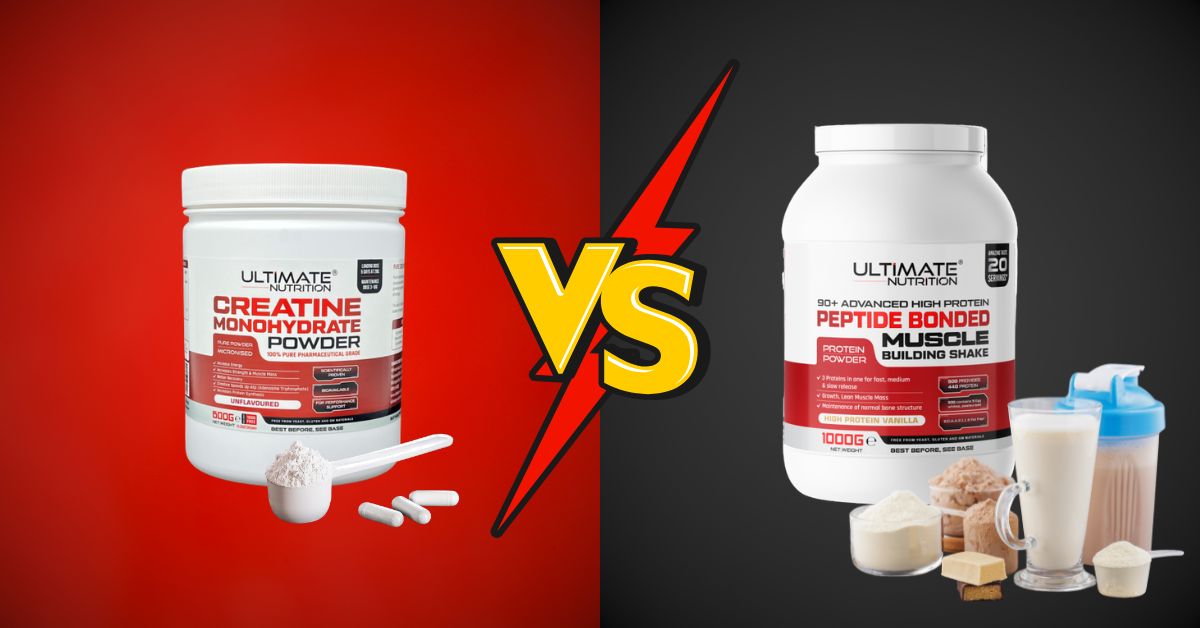
Creatine vs Protein: Do You Need Both?
Two of the most commonly taken sports supplements and yet there is persistent confusion about how they differ, whether they overlap, and whether you need both. The short answer: they do different jobs, and for most people who train regularly, there is a good case for using both. Here is the longer answer.
The Fundamental Difference
The creatine vs protein comparison is a bit like asking whether you need a generator or bricks to build a house. Both are useful, but they serve entirely different functions.
Creatine is an energy compound. It supports ATP regeneration in the muscle during high-intensity exercise giving your muscles more fuel for short, powerful efforts. It does not build muscle directly. What it does is enable you to train harder, produce more force, and recover more quickly between sets. The muscle growth follows from the superior training stimulus.
Protein is a building material. Muscle tissue is made of protein, and after exercise particularly resistance training the body needs sufficient amino acids to repair and rebuild muscle fibres. Without adequate protein, the training stimulus is wasted because the body lacks the raw material to respond to it. Protein does not improve acute performance; it supports the structural outcome of training.
Do They Overlap?
In the creatine vs protein comparison, there is very little functional overlap. They operate through different mechanisms on different timescales and with different outcomes. Creatine works in the seconds to minutes of intense effort. Protein works over the hours and days following training.
This means they are complementary, not interchangeable. Using one does not reduce the need for the other.
Can You Take Creatine and Protein Together?
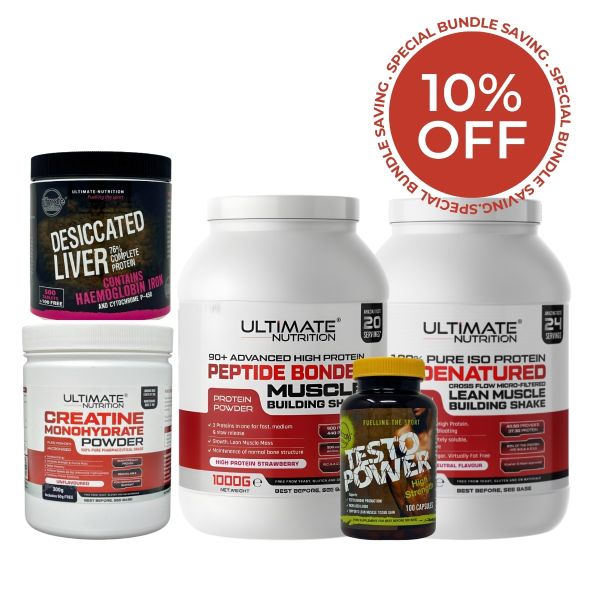
Yes and many people do. Creatine and protein together is a perfectly sensible combination. You can mix creatine monohydrate directly into a protein shake, or take them separately. There is no interaction between the two, no contraindication, and some research suggests that taking creatine alongside carbohydrates or protein may modestly improve its uptake due to the insulin response.
For simplicity, adding a dose of creatine to your post-workout protein shake is a practical approach that covers both requirements in one go.
Which Should You Prioritise?
If you had to choose one which in most cases you do not the answer depends on your diet and goals. If your protein intake from food is already sufficient (roughly 1.6 to 2.2 grams per kilogram of body weight per day), a protein pre-workout supplement adds less incremental value than it would for someone undereating on protein. Creatine monohydrate, by contrast, is difficult to obtain in meaningful quantities from diet alone regardless of how well you eat.
In practice, most people training for strength or muscle development benefit from both: protein to support recovery and muscle growth, creatine capsules to support energy and performance. The difference between creatine and protein is not a competition it is a collaboration.

Recent Posts